



Articles
Why RFID Matters for Wildlife Conservation
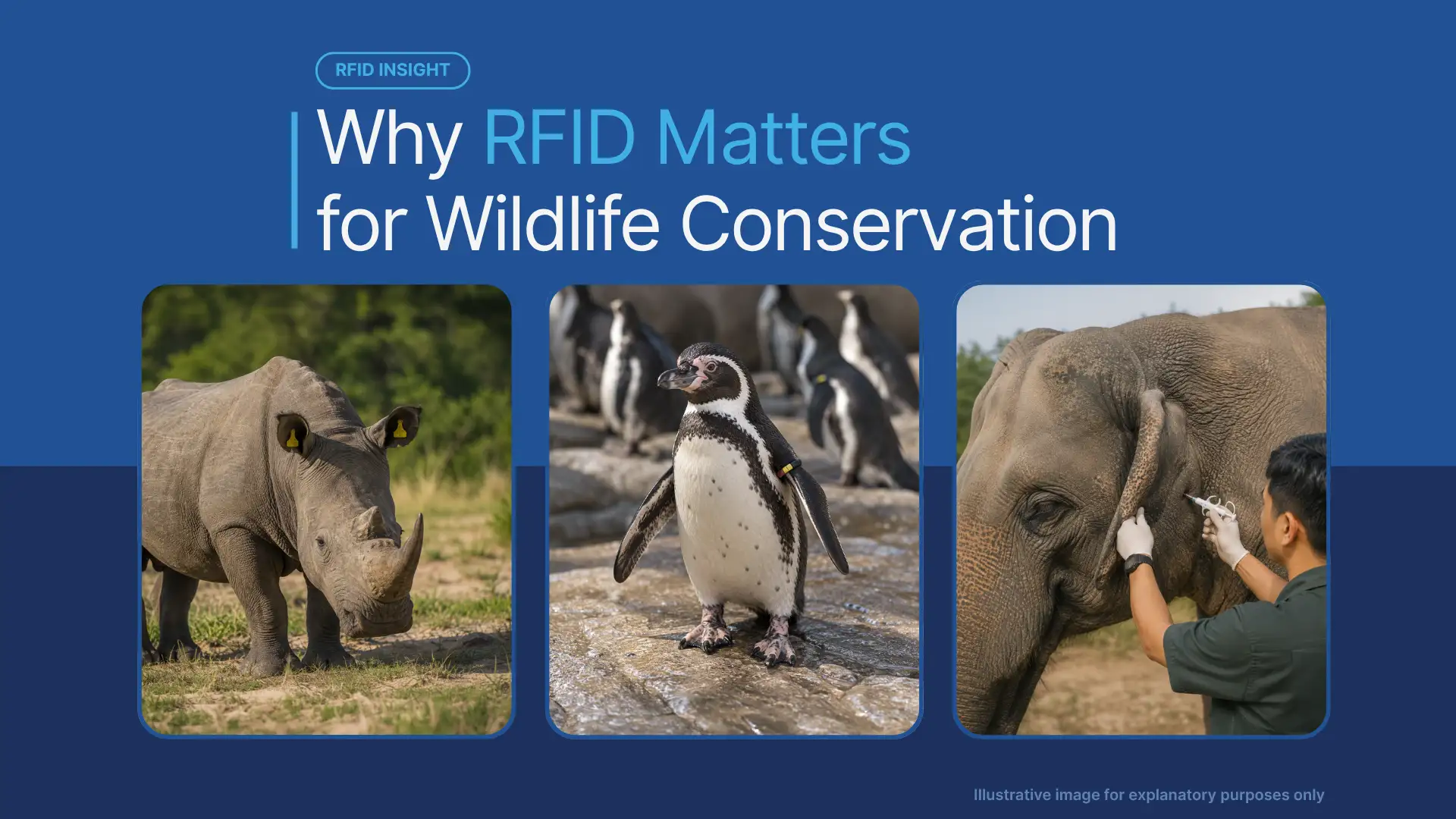
Wildlife populations around the world are declining at an alarming rate. The World Wildlife Fund’s (WWF) Living Planet Report 2024 found that average wildlife populations have dropped sharply since 1970. It is now roughly a quarter of the size it once was. This alarming statistic highlights a hard truth. Biodiversity loss is no longer an issue we can afford to ignore. It is a global challenge that makes wildlife conservation more critical than ever.
The question is no longer simply, “How can we help wildlife?” but rather, “How can we protect wildlife more effectively?”
Wildlife conservation today requires more than field experience and visual observation. At its core, effective conservation depends on collecting accurate data while minimizing disturbance to animals in their natural habitats. This is why RFID (Radio Frequency Identification) has become an increasingly important technology for wildlife conservation around the world.
Behind every RFID system are just two key components: an RFID Tag and an RFID Reader. The RFID Tag, attached to or implanted in an animal, stores the animal’s identification information. When the tagged animal enters the reader’s detection range, the tag sends its data by radio frequency. The reader receives that signal instantly. The reader then captures and displays the information. This lets researchers and wildlife officers identify individual animals quickly, accurately, and without unnecessary handling.
At the heart of this system is the fact that every RFID Tag contains a unique identifier (UID). This gives each animal its own Digital Identity, following the principle of “One Tag, One Animal.” By assigning a permanent and unique identity to every individual, researchers can continuously monitor health records and identification history. They can also track detection events throughout the tag’s operational lifetime. This provides reliable long-term data that supports wildlife research, population monitoring, and conservation efforts. It does so while minimizing disruption to animals’ natural behavior.
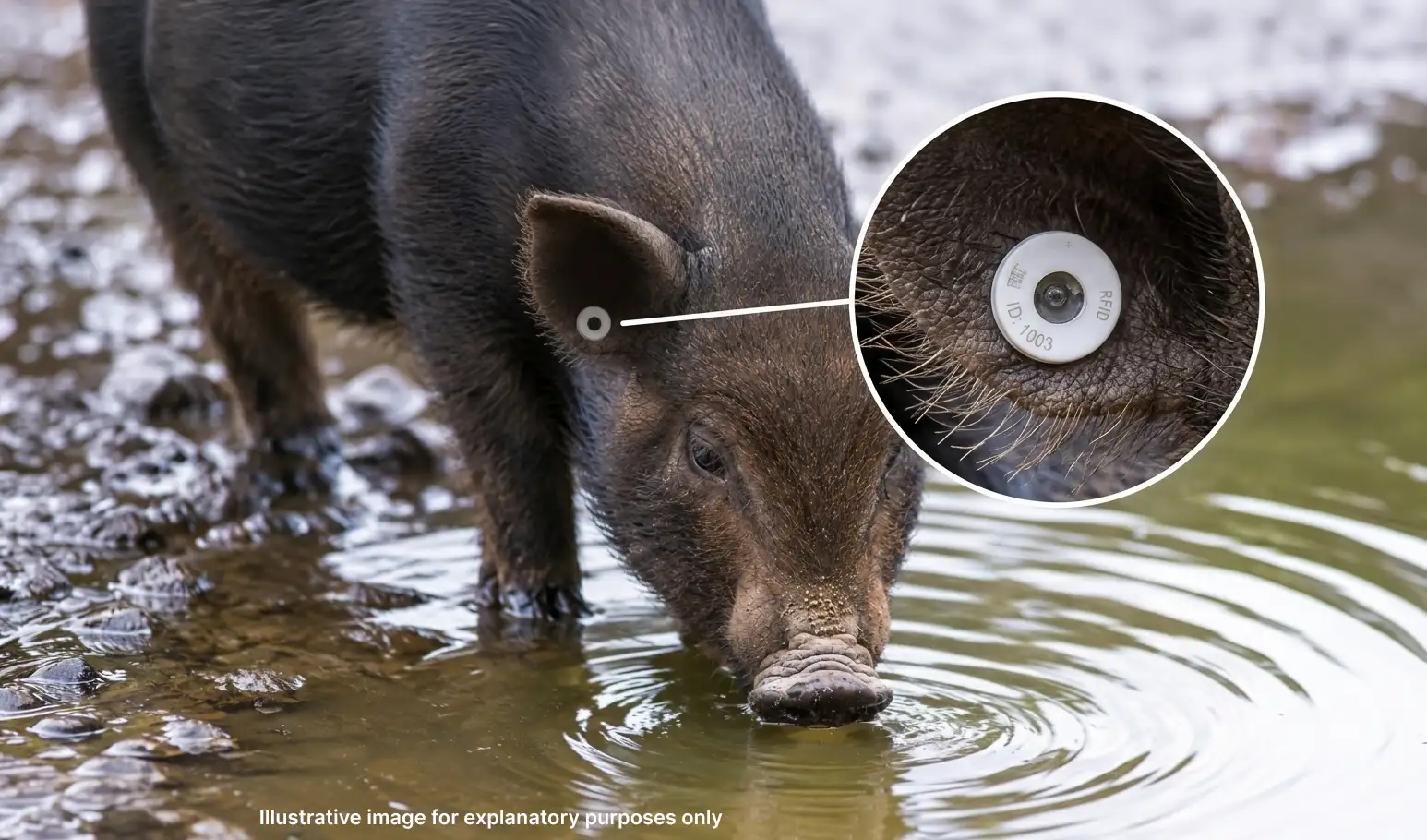
Fig. 1: A close-up of an RFID ear tag, showing how the device attaches to the animal for long-term identification.
Understanding Wildlife Through RFID
Researchers equipped each peccary with a 134.2 kHz low-frequency Half-Duplex (LF HDX) RFID ear tag compliant with the ISO 11784/11785 standard. Researchers installed wireless RFID readers near salt licks, locations that the animals regularly visit. Whenever a tagged peccary entered the reader’s detection range, the system automatically recorded its Unique Identifier (UID). It also logged the date and timestamp.
By combining the data with each reader’s location, researchers could analyze movement patterns, habitat use, and animal behavior. They did this without repeatedly capturing or disturbing the animals.
The capabilities of RFID extend well beyond tracking animal movements. Researchers have also used RFID technology to study the behavior of Painted Buntings, small migratory songbirds.
Researchers fitted each bird with a lightweight RFID tag attached to its leg band. The tag was carefully designed to avoid interfering with flight or natural behavior. Whenever a tagged bird visited an RFID-enabled feeder or nesting site, the reader automatically identified it. The system also recorded the time and location of the visit.
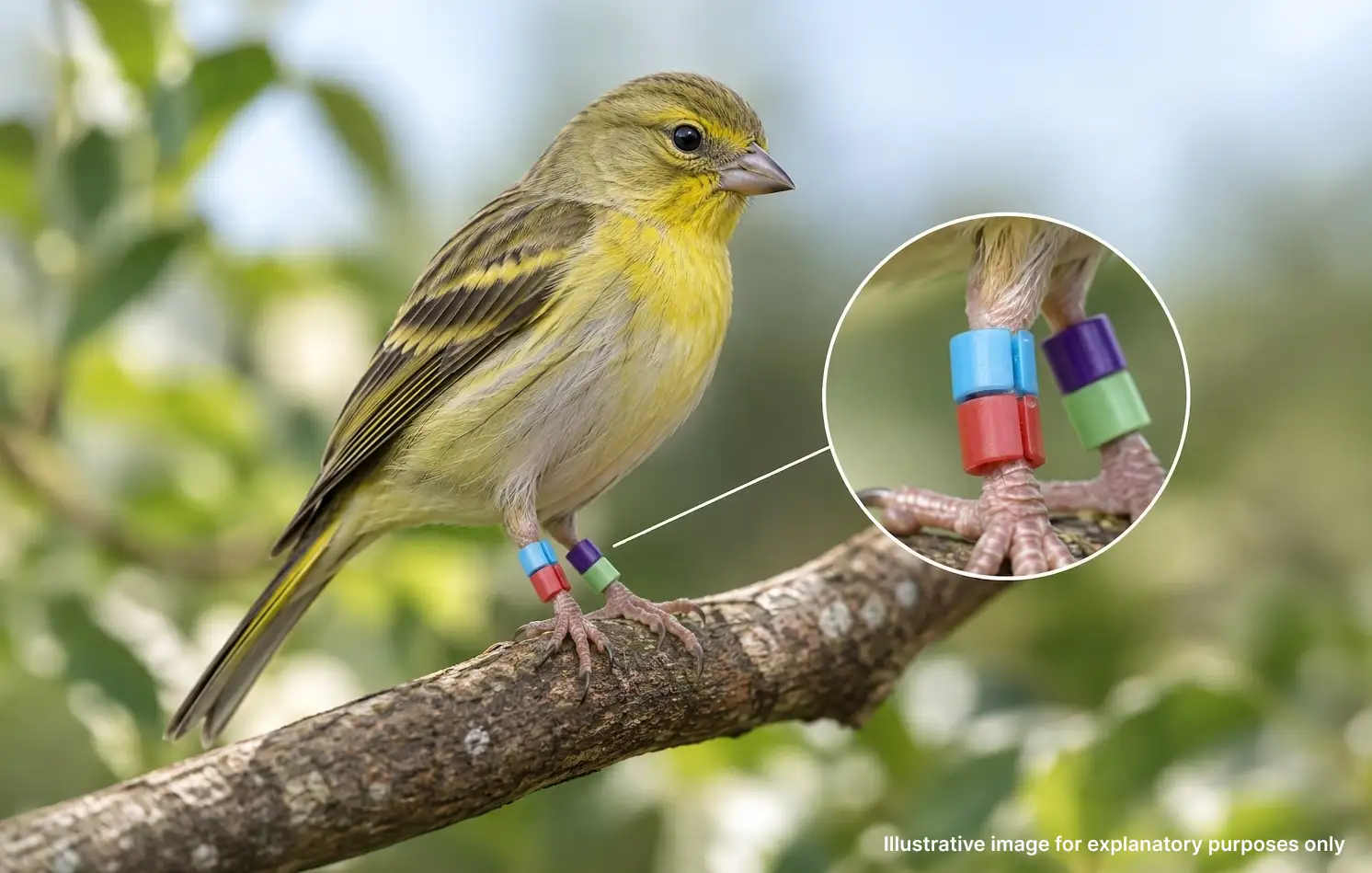
Fig. 2: RFID leg band tag shown attached at the base of the bird’s leg.
These data allow researchers to analyze feeding frequency, feeding duration, and visitation patterns. Feeding behavior is closely linked to an animal’s health, reproductive success, and survival rate. That makes RFID valuable for understanding the well-being of individual birds and the overall health of the ecosystem.
Together, these case studies demonstrate that RFID is far more than an identification technology. It serves as a bridge between humans and nature. Researchers gain a better understanding of wildlife behavior, movement, and ecosystems, all while minimizing disruption to animals’ natural lives. This ability to collect continuous, accurate data with minimal impact is fundamental to sustainable wildlife conservation.
Silicon Craft LF RFID Technology Behind Wildlife Conservation
Wildlife conservation projects demand long-term reliability, accurate identification, and outstanding performance. To meet these needs, Silicon Craft has developed a portfolio of LF RFID microchips designed for Animal Identification applications. These microchips support a wide range of use cases, from scientific research and livestock management to international wildlife conservation programs.
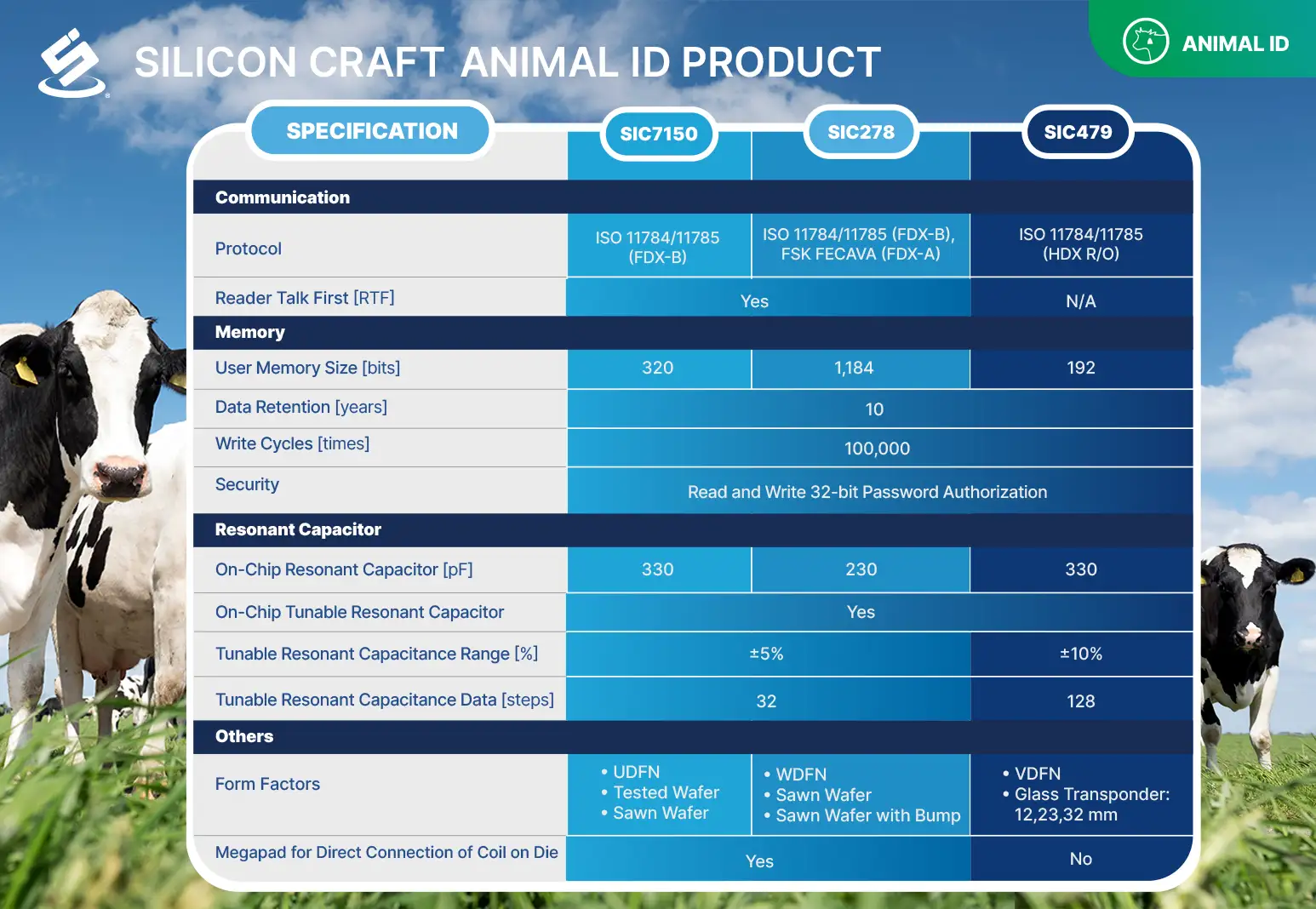
Fig 3: Specification comparison of Silicon Craft’s SIC7150, SIC278, and SIC479 animal identification chips.
SIC7150: Best-in-Class Communication Distance
Designed for systems compliant with ISO 11784/11785 (FDX-B), SIC7150 delivers exceptional communication distance, enabling reliable identification even in challenging environments. Its superior read performance makes it an excellent choice for wildlife monitoring applications where dependable identification is essential.
SIC278: Supporting Both Legacy and Current Systems
ISO 11784/11785 (FDX-B) is the current industry standard for animal identification. Many regions around the world, however, still rely on legacy FDX-A systems. SIC278 support both FDX-A and FDX-B protocols, ensuring seamless compatibility with existing and modern infrastructures. This gives system upgrades greater flexibility while protecting existing investments.
SIC479: Built for Challenging Environments
Wildlife conservation rarely takes place inside laboratories. RFID systems must operate reliably in tropical rainforests, wetlands, and deserts. These environments expose the hardware to humidity, dust, vibration, and fluctuating temperatures.
SIC479 is designed specifically for these demanding conditions. It supports ISO 11784/11785 (HDX) communication and delivers robust, dependable performance in challenging outdoor environments. This makes it well suited for long-term wildlife monitoring applications.
Ultimately, effective wildlife conservation begins with understanding each individual animal. RFID technology empowers researchers to collect accurate, continuous, and reliable data while minimizing disturbance to wildlife in their natural habitats. By transforming observations into meaningful insights, RFID helps conservationists make better-informed decisions to protect biodiversity for future generations.