



RFID Insight
Battery-Free Biochemical Sensing for Wearables with SIC4341
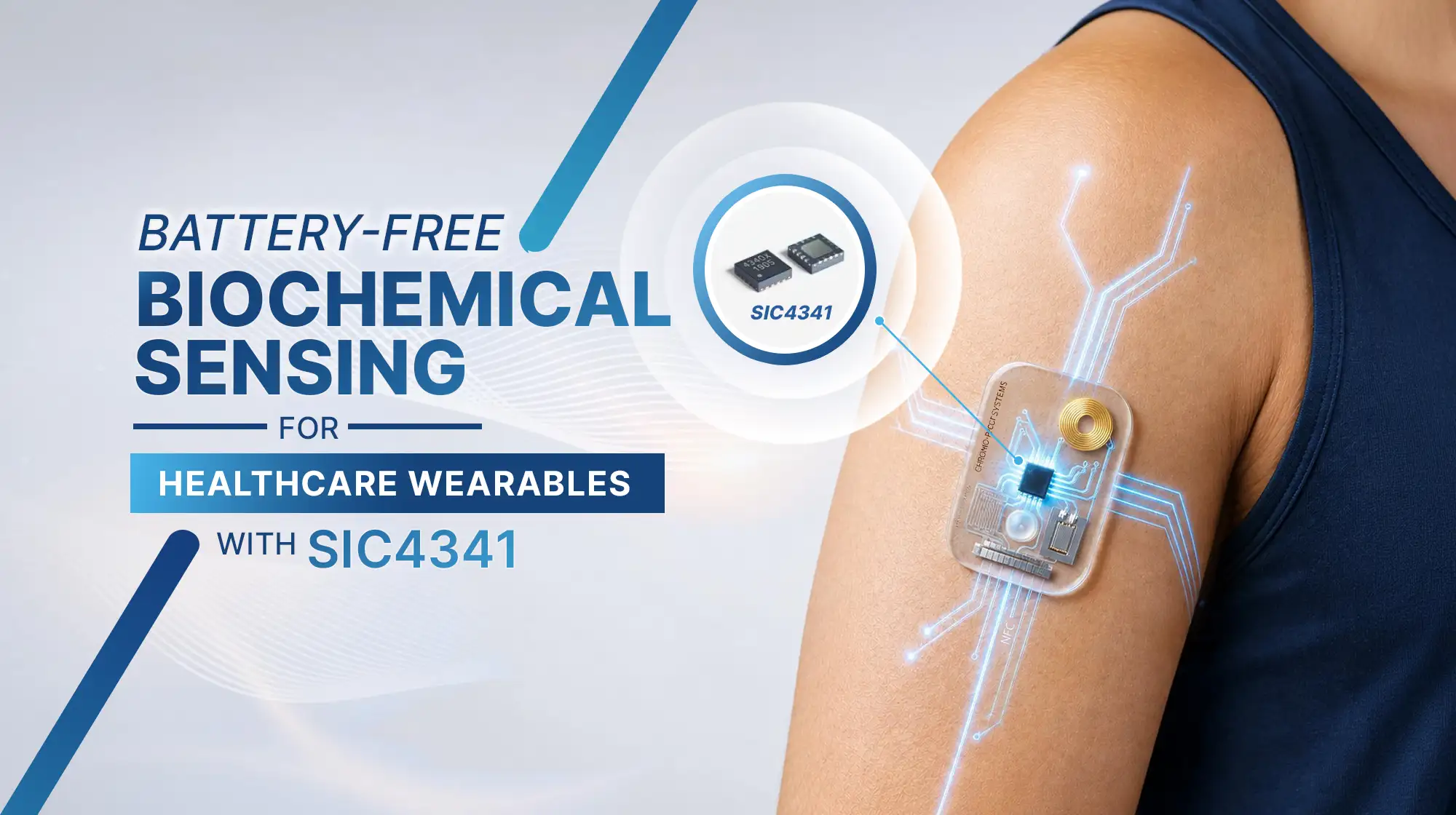
Wearables have outgrown the step counter. What began as a way to log daily activity has become a set of tools people use to catch health issues early, manage chronic conditions, and understand their bodies in ways that once required a clinic visit.
That shift changes what the technology inside a wearable has to do. As biochemical sensing moves toward medical-grade measurement of markers such as glucose, lactate, and cortisol, devices need to get smaller, run without batteries, and communicate securely with a smartphone. This article looks at where the wearable market stands today, the trend pulling it toward healthcare, and how Silicon Craft’s SIC4341 NFC sensor interface chip is already enabling that shift in a commercial product: FLUX I, a sweat lactate monitor developed by Athyx.
What is a Wearable?
A wearable is a smart electronic device worn on the body that collects, processes, and transmits data. The category started with the fitness band and has since split into distinct segments, each matched to a part of the body and a type of data.
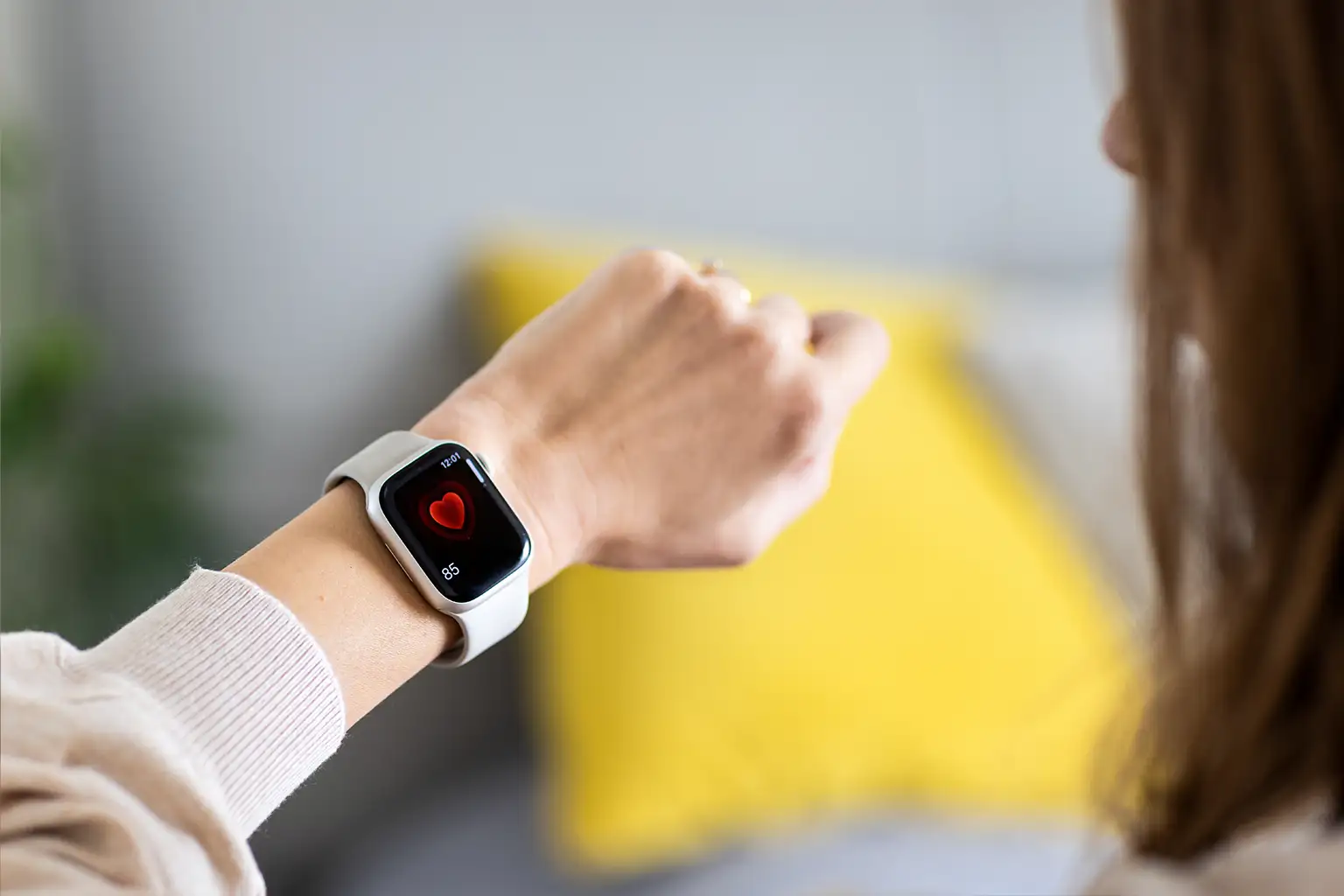
Fig. 1: Key wearable device, wrist-wear.
Wrist-wear is by far the largest segment, at roughly 49.2% of the market [1]. Smartwatches and fitness bands live here, and they are what most people picture when they hear “wearable.” Beyond the wrist, the category keeps expanding:
- Eye-wear and head-wear: smart glasses and AR/VR headsets (HMDs)
- Foot-wear: smart shoes and insoles
- Neck-wear: devices worn around the neck
- Body-wear: smart clothing and patches
- Others: emerging form factors that don’t fit the categories above
This diversification matters. As wearables move into patches and other body-worn formats, the sensing hardware inside them has to adapt. That is the design space SIC4341 was built for.
Market Outlook

Fig. 2: Wearables at retail, where consumer electronics drives 48.5% of the market.
The wearable market is on track to more than double in under a decade, from USD 92.9 billion in 2025 to a projected USD 229.97 billion by 2034 [1]. By application:
- Consumer electronics is the largest segment at roughly 48.5%, driven by smartwatches, fitness trackers, and wireless earbuds [1]
- Healthcare is growing fast, covering remote monitoring, ECG, blood oxygen tracking, and chronic disease management [1]
- Enterprise and industrial applications include smart glasses, wearable scanners, body-worn cameras, and fatigue or safety sensors [1]
- Other applications continue to emerge as the technology matures
Consumer attitudes are pushing in the same direction. According to Mindshare, 66% of people globally now pay more attention to their overall health than they did before COVID-19 [2]. That change in mindset is a major reason healthcare has become one of the fastest-growing applications for wearables.
The Trend Toward
Healthcare Monitoring
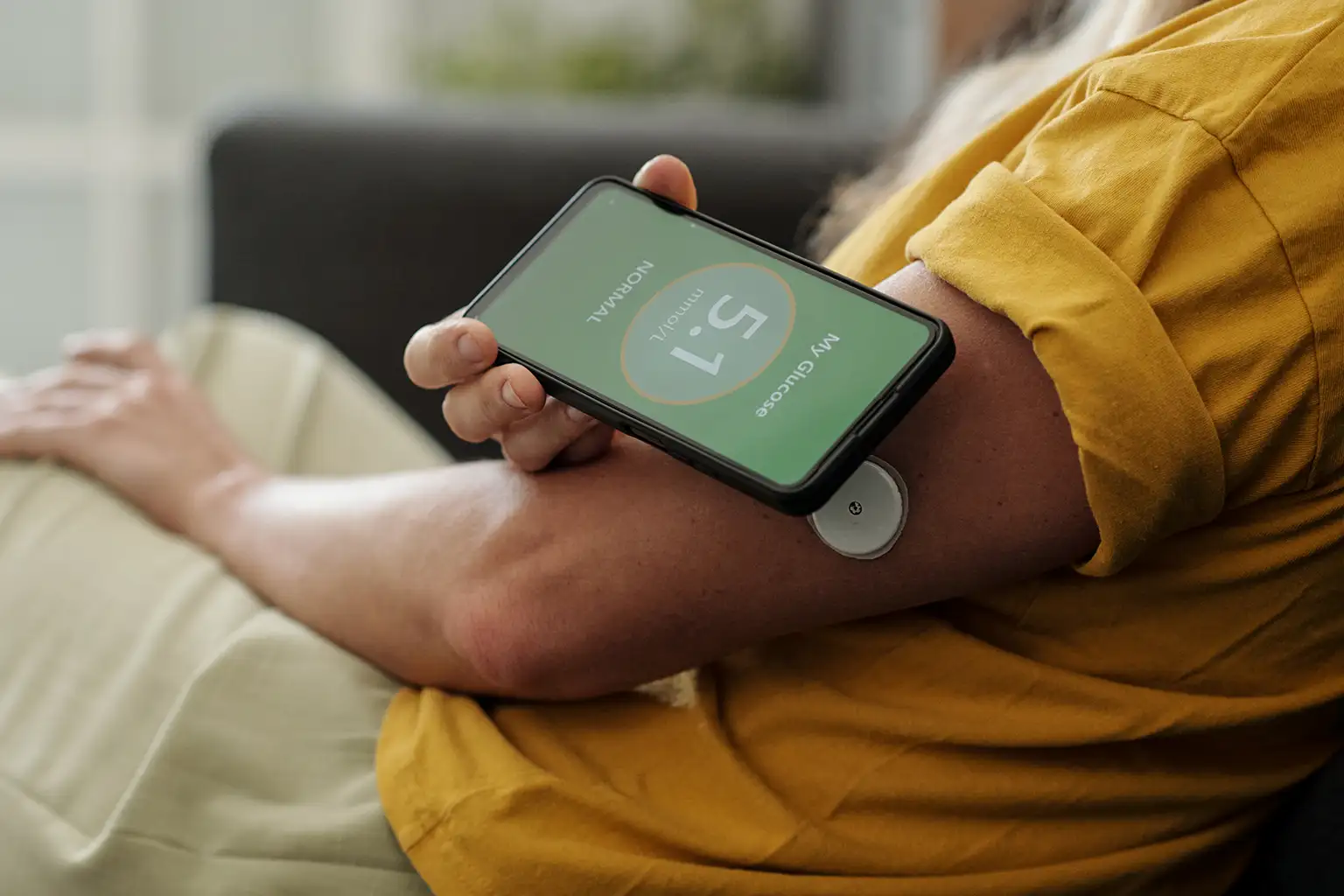
Fig. 3: A CGM patch reading glucose through biochemical sensing, scanned by phone.
The clearest trend in the industry is a three-step progression: fitness tracking, then continuous health monitoring, then medical-grade monitoring.
The numbers back this up. 92% of smartwatch users say they use their device to track and improve their health [3]. More strikingly, 28% of Americans have been alerted to a health issue by their device, and 76% of those went on to receive a confirmed diagnosis from a doctor [3].
Two examples show how far this has already come:
- Apple Watch: its FDA-cleared ECG feature can detect silent irregular heart rhythms such as atrial fibrillation (AFib), which a person may not feel, prompting them to seek medical evaluation [3]
- Continuous Glucose Monitoring (CGM): once available only as a prescription medical device, CGM is now a mainstream consumer product [4]
Both point to the same shift: wearables are moving from measuring activity to biochemical sensing of the body’s underlying chemistry and physiology.
Current Technologies in the Market
Today’s wearables fall into three tiers, each built on a different sensing approach.
Smartwatches are the generalists. They combine PPG (photoplethysmography), IMU, barometric, and ECG sensing to cover steps, heart rate, SpO2, and ECG, supporting everything from activity tracking to sleep monitoring.
Smart rings take a narrower, more discreet approach. Using PPG, ECG, and EIS (electrical impedance spectroscopy), they capture much of the same core data in a smaller, always-on form suited to activity and sleep tracking.
Medical-grade wearables work differently. Instead of optical or motion sensing, they use electrochemical sensing, most commonly for glucose. Their use cases are narrower but higher stakes: diabetes management and broader metabolic health.
The pattern is clear. The devices people wear all day rely on optical and motion sensing, while electrochemical sensing, which reads the body’s chemistry directly, remains largely confined to dedicated medical devices. Closing that gap, and bringing biochemical sensing into everyday wearables, is the next phase of the market.
Where Wearables are Headed
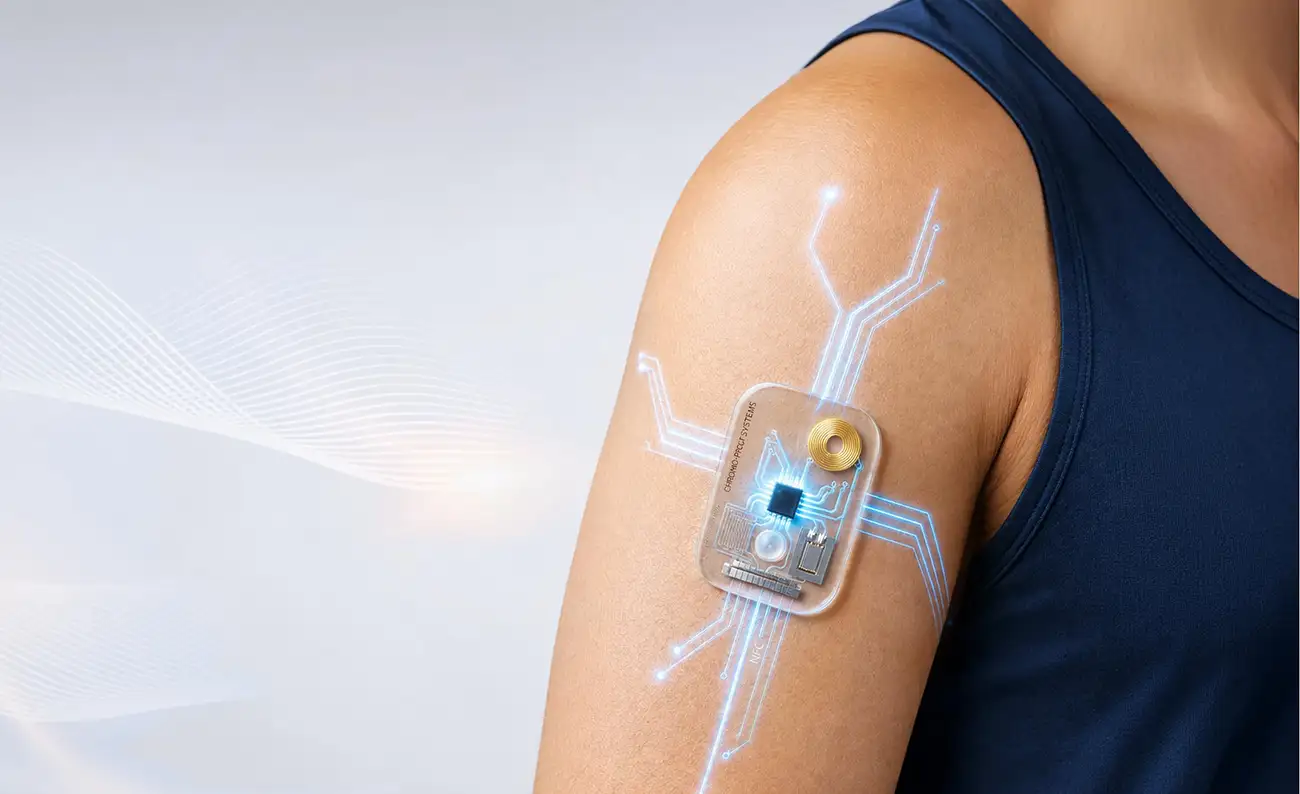
Fig. 4: Where wearables are headed, a battery-free smart patch worn on the skin.
Five developments are driving it:
- Extreme miniaturization and new form factors. Smart rings show how much sensing fits in a small, discreet device. The push continues toward smaller, less obtrusive designs built for continuous wear.
- AI-driven personal health intelligence. Rather than reporting raw numbers, future wearables will offer personalized coaching that adapts to each user’s ongoing data.
- Biochemical sensing on the skin. The most significant shift. Continuous sweat analysis of glucose, lactate, and cortisol takes wearable sensing beyond movement and heart rhythm into metabolic chemistry.
- Hardware optimization. Practical biochemical sensing at wearable scale requires ultra-low-power system-on-chip designs, including edge AI processors that handle data locally to protect privacy.
- Clinical convergence and remote monitoring. As these capabilities mature, wearables increasingly overlap with clinical tools, enabling chronic condition management outside the hospital.
Together, these point to one conclusion: biochemical sensing is where wearables are headed, but delivering it at consumer scale, in devices that are small, disposable, and worn continuously, requires sensing hardware built for that job.
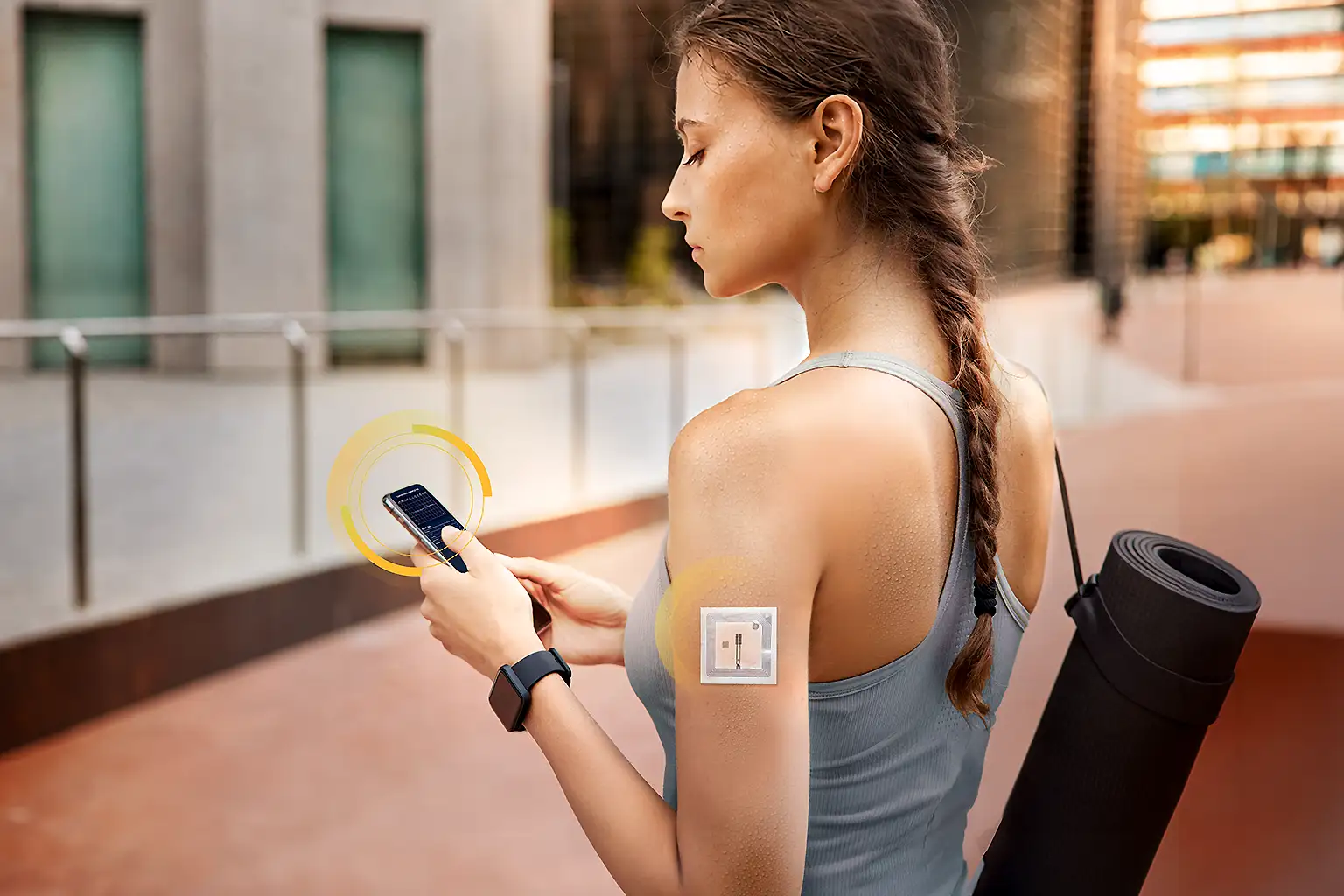
Fig. 5: From conventional device and wearable patch to an NFC-enabled smart patch.
To see what this next generation could look like in practice, consider a concept that merges two existing device types into one: the smart patch.
Conventional medical devices, such as blood glucose meters, measure biomarkers accurately and record health data, but they are often bulky and impractical for continuous daily use. Wearable patches sit at the other end of the spectrum. They are lightweight, flexible, and comfortable, and they can be made small enough to be disposable, which makes them well suited to continuous monitoring.
The smart patch brings these strengths together, integrating electronics, a biosensor, and NFC into a compact, battery-free device designed for long-term wear. The result is smaller, more comfortable, and easier to use than either approach on its own.
NFC is the key enabling technology. Its ultra-low power consumption allows the patch to run without a battery, drawing energy through power harvesting instead. Removing the battery makes the device significantly smaller, and because the patch is disposable, it also helps reduce the risk of biohazard contamination.
A battery-free sensor powered entirely by NFC is where biochemical wearables are heading. It is also exactly where Silicon Craft comes in.
How SIC4341 Enables
Battery-Free Biochemical Sensing
SIC4341 is an NFC potentiostat microchip that integrates the core building blocks of an electrochemical sensing system on a single chip: an RF communication block, a digital-to-analog converter (DAC), an analog-to-digital converter (ADC), and a potentiostat analog front-end (AFE). This simplifies the design of compact, NFC-powered electrochemical devices.
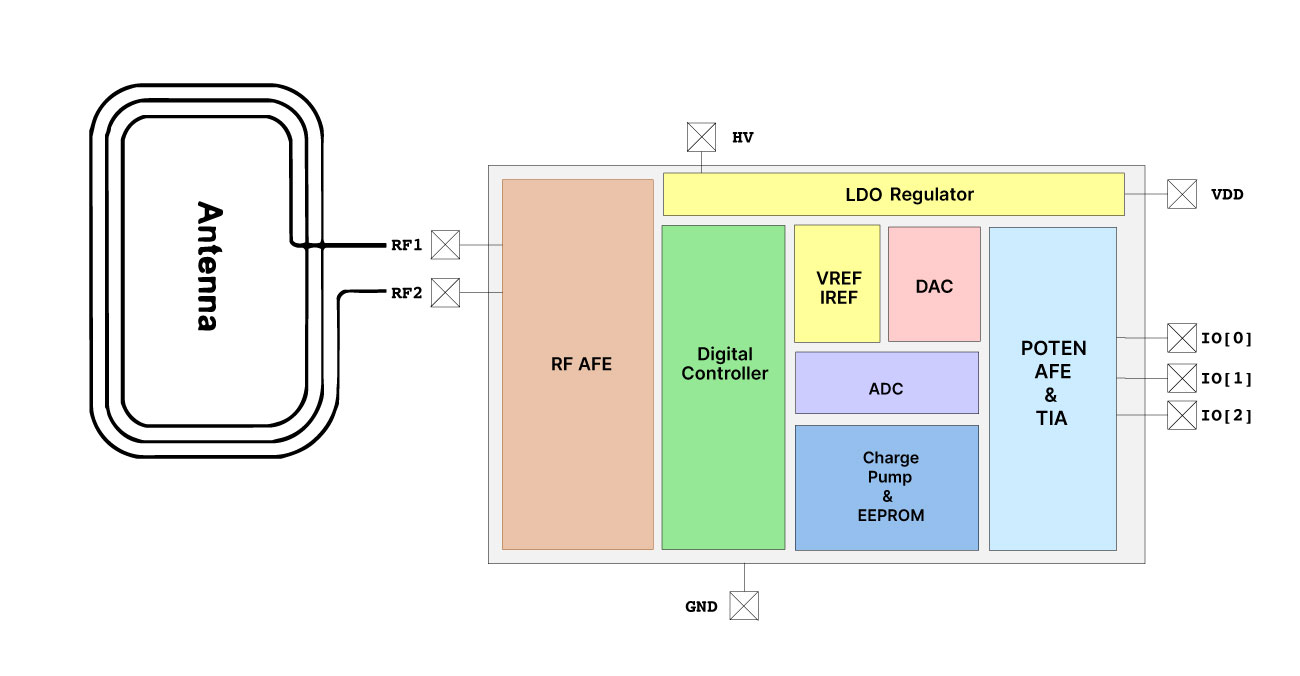
Fig. 6: Functional block diagram of the SIC4341 NFC potentiostat microchip.
A measurement runs in five steps:
- Wireless power and communication. When a smartphone comes within NFC range, SIC4341 harvests energy from the phone through the antenna to power the chip and sensor interface. The Chemister app sets the measurement parameters and sends the measurement commands.
- Voltage applied to the sensor. The chip applies the programmed potential to the electrochemical sensor, starting the reaction at the electrode surface.
- Electrochemical reaction. As the target analyte reacts at the electrode, electron transfer generates a current that corresponds to the analyte’s concentration.
- Signal acquisition. SIC4341 measures this current and converts the analog signal into digital data.
- Results on the smartphone. The data is sent back to the phone, where the app displays and analyzes it.
Key Advantages of SIC4341
- Low cost
SIC4341 works as a single chip, with no external microcontroller (MCU) or supporting components required. An NFC-enabled smartphone and a dedicated app handle configuration, measurement control, data acquisition, and analysis. Fewer parts mean simpler integration, lower hardware complexity, and a more compact device. - Battery-free
The chip runs on energy harvested from the electromagnetic field of an NFC-enabled smartphone or reader, so no onboard battery is needed. Removing the battery reduces size, weight, and cost, making SIC4341 well suited to single-use and disposable skin patches. - Easy to use
No technical training is required. Users follow simple instructions in a mobile app or reader, making the technology accessible to healthcare professionals and consumers alike. - Digital data output
Electrochemical analysis produces quantitative, objective results. Digital data is easy to record, transmit, and analyze, reducing interpretation errors and supporting long-term monitoring.
Success Case: FLUX I in Practice

Fig. 7: FLUX I by Athyx, a wearable sweat lactate monitor built on the SIC4341 chip.
Athyx is a sports technology company developing wearable, non-invasive lactate monitoring for endurance athletes. Its FLUX I device uses SIC4341 as the potentiostat sensor AFE, measuring lactate in sweat through an exposed sensor pad. The chip is qualified and already in use in the product. When a smartphone’s NFC antenna comes near the sensor antenna, the chip powers up, and the measurement is controlled and analyzed through the mobile app.
Conclusion
Wearables are moving from fitness tracking to continuous health and biochemical monitoring. As demand grows for measuring biomarkers such as glucose and lactate, devices must become smaller, simpler, and more energy-efficient while still delivering reliable quantitative data.
Silicon Craft’s SIC4341 meets these requirements by combining sensing, data conversion, NFC communication, and energy harvesting in a single microchip. Battery-free operation, no external MCU, simple use, and digital output make it a strong fit for compact, disposable wearable biosensors.
FLUX I by Athyx shows SIC4341 working in a real-world biochemical sensing product. As healthcare wearables continue to expand, SIC4341 will help power the next generation of accessible, cost-effective, battery-free health monitoring devices.
References
[1] IMARC Group. (2025). Wearable technology market size, share and industry report, 2034.https://www.imarcgroup.com/wearable-technology-market
[2] Mindshare. (2022, October). Mindshare’s Wellness Revolution report: People care more for their wellbeing than ever before. https://www.mindshareworld.com/news/mindshares-wellness-revolution-report-people-care-more-for-their-wellbeing-than-ever-before
[3] Apple. (2019, March 16). Stanford Medicine announces results of unprecedented Apple Heart Study [Press release]. https://www.apple.com/newsroom/2019/03/stanford-medicine-announces-results-of-unprecedented-apple-heart-study/
[4] GoodRx. (n.d.). 7 over-the-counter continuous glucose monitoring FAQs answered.https://www.goodrx.com/classes/medical-supplies-and-devices/otc-continuous-glucose-monitor-faqs