



Articles
How Semiconductors Improve Automotive Safety
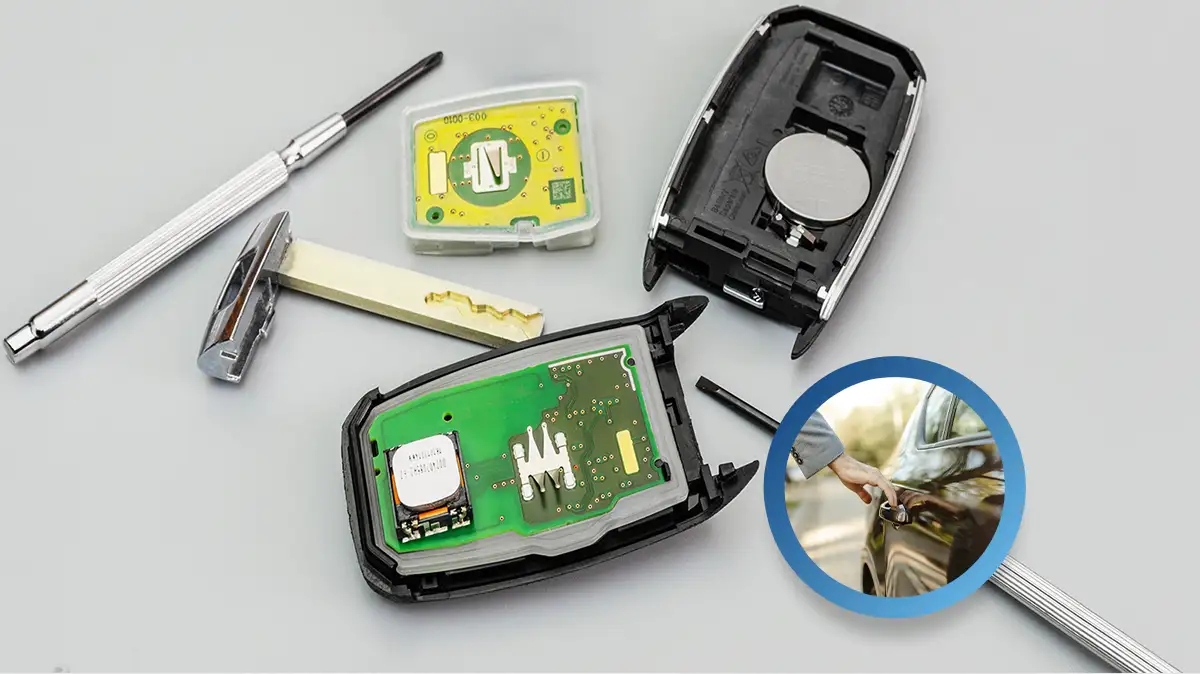
How semiconductor innovation improves automotive safety compliance
There was a time when automotive safety relied heavily on mechanical systems, including something as simple as a traditional metal key blade. While effective for their era, these approaches left critical gaps, especially in secure vehicle access control and anti-theft protection.
As vehicles became more connected, those gaps turned into real risks. That’s where semiconductor innovation stepped in. Today, the chip inside your key fob does far more than you might expect. It proves to your car that the key is legitimate, encrypts communication between the two, and responds in real time, keeping vehicles secure and roadworthy.
Three capabilities make this possible:
- Secure key storage ensures that your vehicle only responds to authorized keys, protecting against cloning and spoofing attacks.
- Hardware-based cryptography moves security out of software and into the chip itself, making it significantly harder to compromise.
- Integrated safety diagnostics allow the vehicle to continuously monitor its own systems, catching issues before they become failures.
Take immobilizer systems as a clear example. What was once a relatively simple anti-theft deterrent has evolved into a sophisticated, cryptographically protected layer of defense, making unauthorized access significantly harder to pull off. As vehicles get smarter and more connected, semiconductor innovation will continue to play a critical role, keeping them secure, reliable, and ready for the road. Because in today’s vehicles, safety isn’t just mechanical. It’s intelligently engineered. Is your car smarter than you think?