



Articles
Passive RFID Sensors: The Future of Switchgear Monitoring
How Passive RFID Is Redefining the Future of Switchgear Monitoring
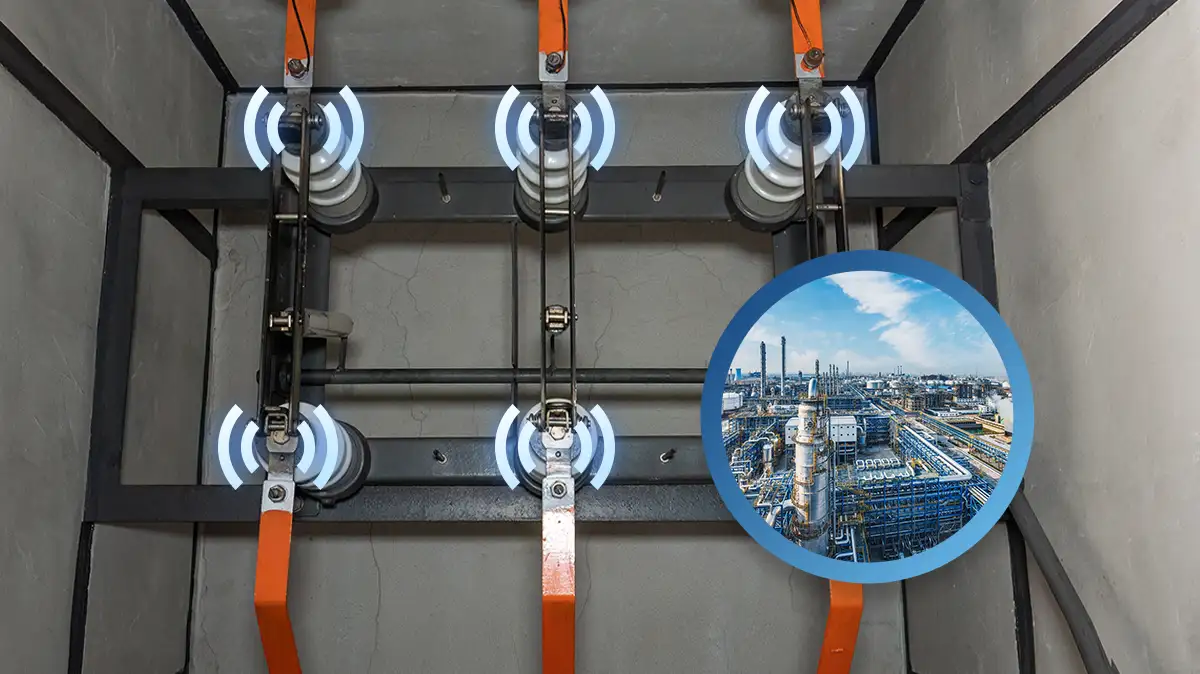
Most industrial plant failures don’t come out of nowhere. Heat builds up quietly at busbar screw connections, and without continuous monitoring, no one notices until it’s too late. For years, the standard solution was infrared cameras. But that means shutting down the system every time you want a reading. Since cables can’t be placed directly on the busbars due to high voltage, and the system must be shut down for each reading, continuous real-time monitoring simply isn’t possible with traditional technology. However, using a Passive RFID Sensor changes this limitation.
Passive RFID sensors change the equation entirely.
Here’s how it works: a passive RFID tag chip is embedded directly at the busbar screw connection, requiring no battery or wiring. A wireless reader powers the tag, captures the temperature reading, and transmits the data, all while the system keeps running. No downtime. No blind spots. In fact, a Passive RFID Sensor makes continuous operation feasible and effortless.
Key benefits of RFID in switchgear
- Continuous temperature monitoring, without shutting down the system
- Accurate asset identification, even in harsh environments
- Easy access to service history and technical data
- Seamless integration with existing control systems
- Improved safety and compliance tracking
Because in power distribution, the best time to catch a problem is before it becomes one. To sum up, employing a Passive RFID Sensor in switchgear delivers a true advancement in reliability and safety monitoring.