



White Papers
Heavy Metal Detection in Water
Introduction
Water pollution is a serious worldwide issue affecting various aspects of society, such as human/animal healthcare, the food chain, and the tourism industry; therefore, the improvement of water quality can encourage the economic growth of a nation and contribute significantly to inequality reduction. Accessing clean and safe water for daily consumption, such as drinking, cooking, personal hygiene, and sanitation, is a fundamental human right.
However, according to the World Health Organization (WHO) report, there are 772 million people who lack even essential drinking water services and 122 million people who depend on surface water. Globally, at least 2 billion people use contaminated drinking water sources [1]. Contaminated water can cause numerous health concerns, including diarrhea, cholera, dysentery, typhoid, and polio [2]. Heavy metals are one of the primary sources of water pollution. They are persistent in the environment once discharged, which is a significant cause of concern for the toxicity of the water. Therefore, heavy metals must be removed from the water source in the water treatment process to ensure clean drinking water.
Heavy metals are metallic chemical elements with relatively high density (>5 g cm-3) [3]. Most heavy metals or specific forms of these elements are even classified as human carcinogens that threaten both ecological balance and human health at trace levels, such as arsenic (As), cadmium (Cd), chromium (Cr), lead (Pb), and mercury (Hg) [4]. The ongoing expansion of heavy metal pollution results from several factors, including natural processes or pollutants discharged into the environment—for example, in natural processes cases, As is released from weathered rock and contaminates groundwater aquifers [5]. Meanwhile, the development of industrial activities is a primary source to inevitably contributes to heavy metal contamination in the environment.
Especially, hazardous substances and controlled chemicals used in the production process consisting of Pb, Cd, Hg, and Cr have been reported [6]. In general, Pb, Cd, Hg, and Cr could be presented in water as a result of emission from the plant, Pb from a battery plant , Cr from an electroplating plant, and Hg and Cd from a power plant.
Moreover, the toxicity of heavy metals usually depends on the oxidation states of each element. For example, the inorganic compound of As(III) is generally considered to be more toxic than As(V) up to 60-fold. Besides, Cr(III) is regarded as an essential element for mammals that plays a major role in insulin, lipid, and glucose metabolism.
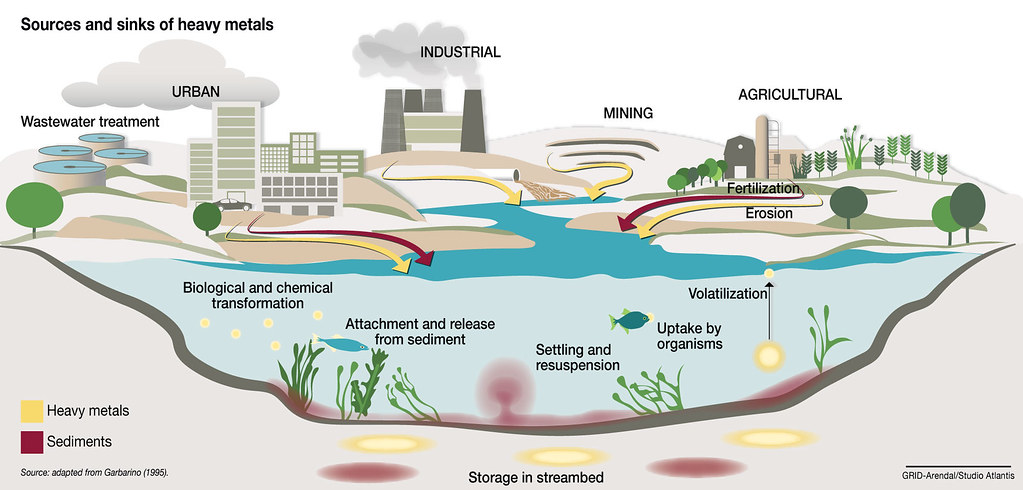
Figure 1: Sources and sink of heavy metals
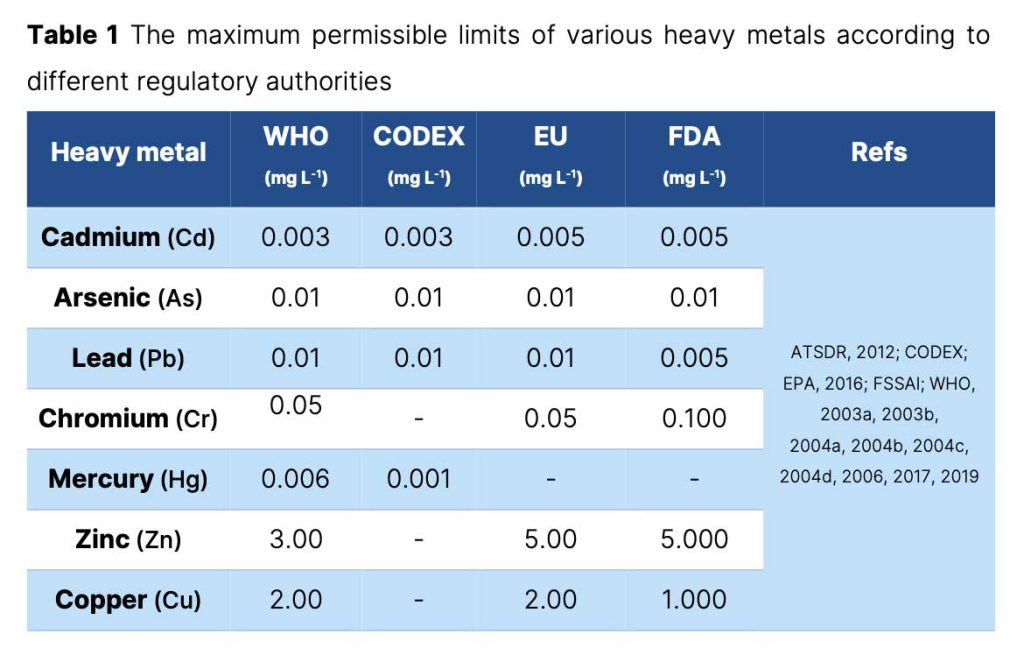
Therefore, various industrial processes can produce problematic heavy metal concentrations in discharged water from factories that are harmful to humans and can contaminate agricultural land. The source and sink diagram of heavy metal are presented in Figure 1. Testing for heavy metals at the part per billion (ppb) level is essential to meet established international limits. The maximum permissible concentration of heavy metals in wastewater has been regulated by various regulatory authorities, as shown in Table 1.
The conventional techniques for heavy metal detection comprise atomic absorption spectroscopy (AAS) [8, 9], flame or furnace spectroscopy [10], inductively coupled plasma optical emission spectroscopy (ICP−OES) [11, 12], inductively coupled plasma mass spectrometry (ICP−MS) [13, 14], and energy dispersive X-ray fluorescence (EDXRF) spectrometry [15]. Although these techniques are highly sensitive and selective to the trace level of heavy metals, there are some limitations, including being operated by a trained scientist and needing more field test portability due to their bulky and expensive instruments. Extensive sample preparation in high sample volume might be required and need a long time to run. A single mislabeled sample from outside laboratory service can result in extensive downtime.
Moreover, their operating costs are also high. Since heavy metal pollution in the environment is constantly increasing due to the growth of industrial development and their high toxicity that threatens the ecological balance and human health, there is a high demand for the development of a rapid, portable, and on-spot automated detection system. Compared with traditional methods, electrochemical detection of heavy metal ions is a very promising strategy that has attracted widespread attention due to its portability, fast analysis, and low cost. Therefore, the electrochemical instrument can be adapted to various on-site inspection sites and applied in agriculture, life science, clinical diagnosis, and analysis.
Electrochemical Detection
Electroanalytical methods have been extensively applied in sensing and biosensing. An electroanalytical sensor is based on electrochemical transduction that employs a two- or three-electrode arrangement, as shown in Figure 2. Electrochemical transductions need the potentiostat, which is an electronic instrument to control the potential between its electrode and measure the current flow through the chemical cell.
The principle of the electrochemical method is to study the chemical process that results in electron transfer. The electron exchange phenomenon produces a form of electrical change, i.e., current, potential, charge, and so on, which could be generated by such a process between the electrode and electrolyte known as an oxidation-reduction (redox) reaction. For the electroanalysis of heavy metal, anodic stripping voltammetry is widely used to quantify the concentration of heavy metal. In the electrode position step, the constant potential is applied over a period of time for the accumulation of the target analyte onto the electrode surface by a reduction reaction (M+ + e- → M(0)) before the stripping step.
According to the heavy metal preconcentration process, the response signal of heavy metal exhibits a high stripping current using the anodic or cathodic stripping method. In the stripping method, electrochemical techniques such as linear scan voltammetry, differential pulse voltammetry, square wave voltammetry, etc., could be performed to measure the concentration of heavy metal. The experimental result is presented in a linear relationship between the stripping current vs. the concentration of heavy metal.
![electrochemical cell of a) two-electrode system and b) three-electrode system [16]](https://www.sic.co.th/wp-content/uploads/2024/10/electrochemical_cell.jpg)
Figure 2 electrochemical cell of a) two-electrode system and b) three-electrode system [16]
Portable NFC Potentiostat Card from Silicon Craft Technology PLC
Heavy metal measurement was performed using SIC4341 Flexsense ExP card which uses SIC4341 NFC Potentiostat sensor interface chip as a core. NFC is a wireless communication technology that enables short-range contactless communication between two compatible electronic devices.
The SIC4341 Flexsense ExP card is electronic hardware designed to harvest radio frequency energy to acquire and transmit data to a smartphone over a short distance (less than 5 cm depends on NFC field strength). This potentiostat card enable miniaturized, portable, and battery-free electrochemical measurement, which can be applied in various chemicals or biomolecule applications. Only four components are required for measurement, an SIC4341 Flexsense ExP card, a smartphone with NFC, an RF antenna, and sensing electrodes for the detection of target analytes, as shown in Figure 3).
Based on this concept, electrochemical analysis can be easily carried out. The measurement condition can also be configured through a smartphone. Real-time data acquisition and processing can be done in cloud service via mobile phone.
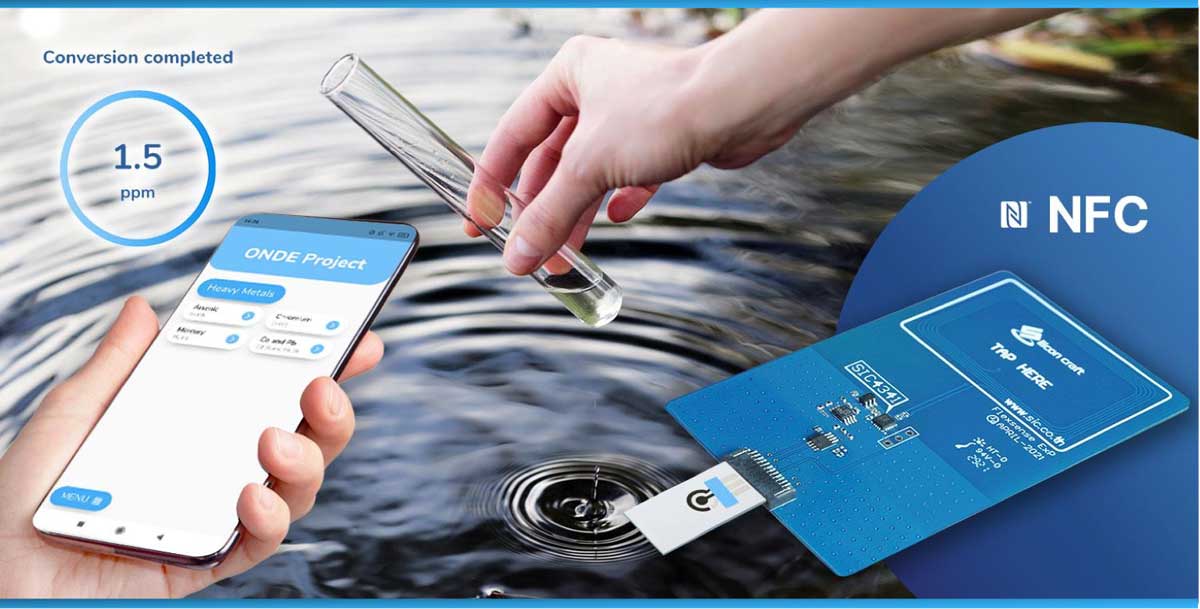
Figure 3 image of SIC4341 NFC potentiostat card and application on a smartphone for the detection of heavy metal
SIC4341 Specifications
SIC4341 Potentiostat sensor interface with NFC type 2 chip consists of
- RF Analog-Front-End circuit supporting ISO14443A
- Selectable 6-to-16-bit resolution sigma-delta ADC
- 8-bit DACs
- Potentiostat analog frontend circuit
- EEPROM
SIC4341 chip can be operated using energy harvested from a mobile phone or NFC reader without any battery. Chip size is 1.2 x 1.2 mm2, as shown in Figure 4.
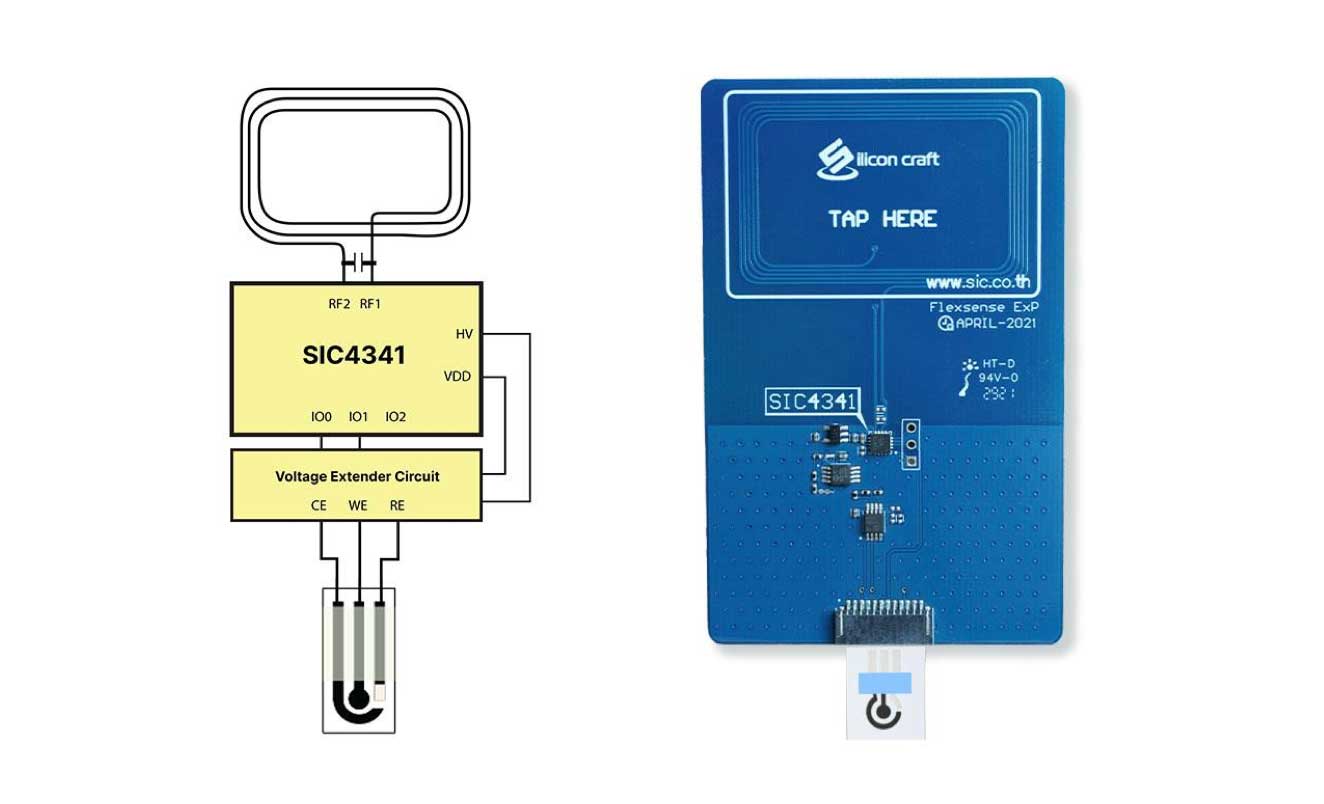
Figure 4 SIC4341 Flexsense ExP card
Summary and Conclusion
During the ongoing expansion of pollutants, caring for our environment and human health must be realized. Heavy metal contamination in the environment is a silent threat that we usually disregard. Therefore, the monitoring and control of the expansion of heavy metals should be a concern. A real-time and low-cost device is urgently required to develop onsite analysis of heavy metal.
Silicon Craft Technology provides the portable potentiostat sensor interface chip using contactless communication on a smartphone via NFC system – SIC4341. Using SIC4341, the potentiostat can be considerably reduced in size and cost compared with the commercial potentiostat. The superior points of the NFC potentiostat card are the portability for in-field analysis and digital results on the cloud or server for increasing access in the real-time test.
Moreover, the procedure is simple and does not require professional skill in analysis and interpreting results. The SIC4341 has demonstrated the miniaturized potentiostat capable of determining five heavy metals, including As(III), Cr(VI), Hg(II), Pb(II), and Cd(II) on a smartphone in an acceptable range (in ppb level) of the WHO guideline values. The utility of this NFC sensing platform can be served as a prototype for the electroanalysis of other toxic metals.
References
[1] W. H. Organization, “Drinking Water Factsheets,” ed: WHO Geneva, 2017.
[2] W. H. Organization, “Water, sanitation and hygiene links to health: facts and figures,” in Water, sanitation and hygiene links to health: facts and figures , 2004.
[3] B. J. Alloway, Heavy metals in soils: trace metals and metalloids in soils and their bioa vailability . Springer Science & Business Media, 2012.
[4] P. B. Tchounwou, C. G. Yedjou, A. K. Patlolla, and D. J. Sutton, “Heavy Metal Toxicity and the Environment,” in Molecular, Clinical and Environmental Toxicology: Volume 3: Environmental Toxicology , A. Luch Ed. Basel: Springer Basel, 2012, pp. 133-164.
[5] J. A. Saunders et al., “Natural arsenic contamination of Holocene alluvial aquifers by linked tectonic, weathering, and microbial processes,” Geochemistry, Geophysics, Geosystems, vol. 6, no. 4, 2005.
[6] L. Toyota Motor Thailand Co. “CORPORATE POLICIES & MANAGEMENT.” https://www.toyota.co.th/en/corporate/policy (accessed 14 February,2023).
[7] G.-A. S. Atlantis. “Sources and sinks of heavy metals.” https://www.grida.no/resources/13718 (accessed 20 February, 2023).
[8] K. O. Omeje et al., “Quantification of heavy metals and pesticide residues in widely consumed Nigerian food crops using atomic absorption spectroscopy (AAS) and gas chromatography (GC),” Toxins, vol. 13, no. 12, p. 870, 2021.
[9] A. E. Noor et al., “Heavy metals toxicity in spinach (Spinacia oleracea) irrigated with sanitary wastewater in rural areas,” Journal of King Saud University – Science, vol. 35, no. 1, p. 102382, 2023, doi: https://doi.org/10.1016/j.jksus.2022.102382.
[10] M. H. Habibollahi et al., “Extraction and determination of heavy metals in soil and vegetables irrigated with treated municipal wastewater using new mode of dispersive liquid–liquid microextraction based on the solidified deep eutectic solvent followed by GFAAS,” Journal of the Science of Food and Agriculture, vol. 99, no. 2, pp. 656-665, 2019, doi: https://doi.org/10.1002/jsfa.9230.
[11] K. M. Dimpe, J. C. Ngila, N. Mabuba, and P. N. Nomngongo, “Evaluation of sample preparation methods for the detection of total metal content using inductively coupled plasma optical emission spectrometry (ICP-OES) in wastewater and sludge,” Physics and Che mistry of the Earth, Parts A/B/C, vol. 76-78, pp. 42-48, 2014, doi: https://doi.org/10.1016/j.pce.2014.11.006.
[12] S. V. Smirnova, D. V. Ilin, and I. V. Pletnev, “Extraction and ICP-OES determination of heavy metals using tetrabutylammonium bromide aqueous biphasic system and oleophilic collector,” Talanta, vol. 221, p.121485, 2021,
doi: https://doi.org/10.1016/j.talanta.2020.121485.
[13] Y. Li, G. Peng, Q. He, H. Zhu, and S. M. Z. F. Al-Hamadani, “Dispersive liquid–liquid microextraction based on the solidification of floating organic drop followed by ICP-MS for the simultaneous determination of heavy metals in wastewaters,” Spectrochimica Acta Part A: Molecular and Biomolecular Spectroscopy, vol. 140, pp. 156-161, 2015, doi: https://doi.org/10.1016/j.saa.2014.12.091.
[14] G. K. Kinuthia, V. Ngure, D. Beti, R. Lugalia, A. Wangila, and L. Kamau, “Levels of heavy metals in wastewater and soil samples from open drainage channels in Nairobi, Kenya: community health implication,” Scientific Reports, vol. 10, no. 1, p. 8434, 2020, doi: 10.1038/s41598-020-65359-5.