



Articles
When Should Engineers Choose LF RFID?
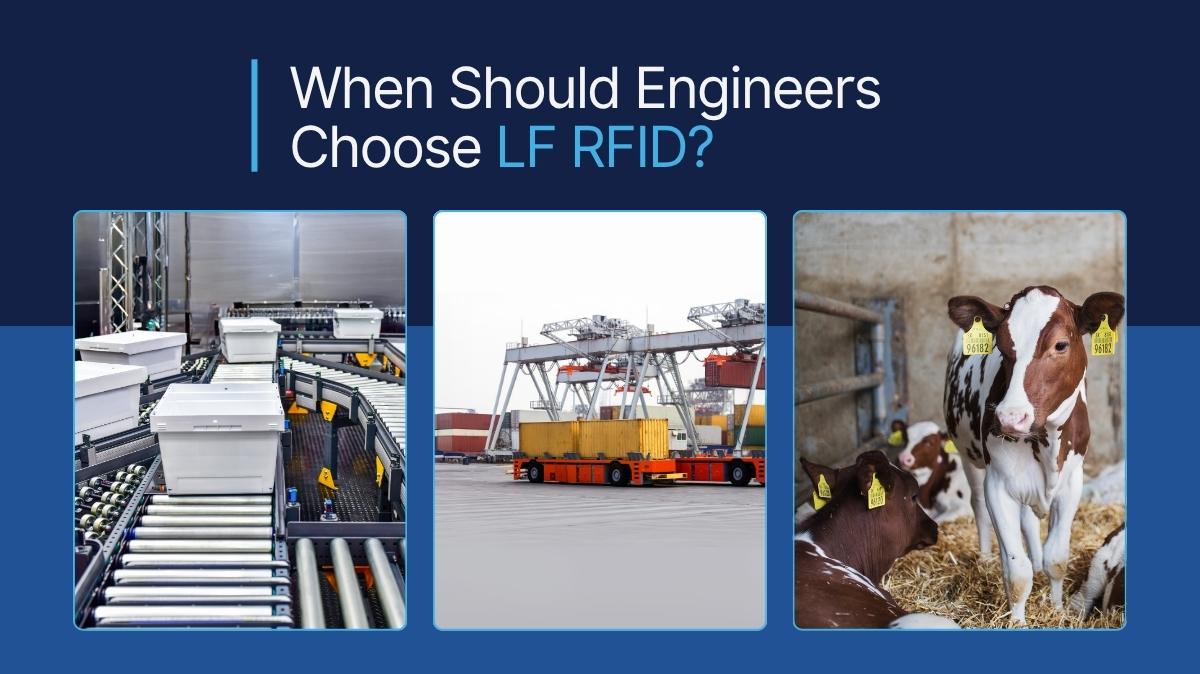
Why LF RFID Still Matters
In a world that keeps pushing toward high-speed, long-range RFID technologies, it’s easy to overlook the role of Low Frequency (LF) RFID microchip. Yet it quietly remains a top engineering choice, but only in the right conditions.
From a design perspective, LF RFID isn’t about performance on paper. It’s about performance in reality.
When LF RFID Is the Right Choice
Choose LF RFID when:
- Your environment is harsh or electrically noisy.
- You’re working with metal surfaces, liquids, or biological materials.
- You need consistent, predictable short-range reads.
- Cost and design simplicity are important engineering considerations.
These are the situations where LF RFID consistently delivers reliable performance.
When LF RFID Is Not the Best Option
Avoid LF RFID when:
- Your application requires long read distances, where UHF RFID is a better fit.
- Your system demands high data throughput or fast data exchange.
Selecting the wrong RFID technology can increase both cost and design complexity.
Choosing the Right RFID Technology
The real engineering insight is this: LF RFID is not a legacy technology—it’s a context-driven engineering decision.
The best engineers don’t simply adopt the newest technology. They choose the technology that delivers the most reliable performance for their application.
For many industrial automation, automotive, waste management, and animal identification systems, LF RFID continues to be the right choice.