



Articles
Why Global Access Control Systems Still Rely on HF RFID
HF RFID Technology: Built for Security, Trusted Globally
That small tap when you badge into a building isn’t just habit, it’s intentional by design. In a world where access control technology keeps evolving, one standard has quietly remained the global backbone of physical security for decades.
High-Frequency (HF) RFID Technology operates at 13.56 MHz and is engineered to work only when a badge is placed directly against a reader. This means a door only unlocks when someone deliberately chooses to open it, a simple but critical safety feature. Unlike technologies that read credentials from a distance, HF RFID puts the user in control. That level of intentionality isn’t a limitation, it’s the point.
3 Reasons HF RFID Technology Remains the Global Standard for Access Control:
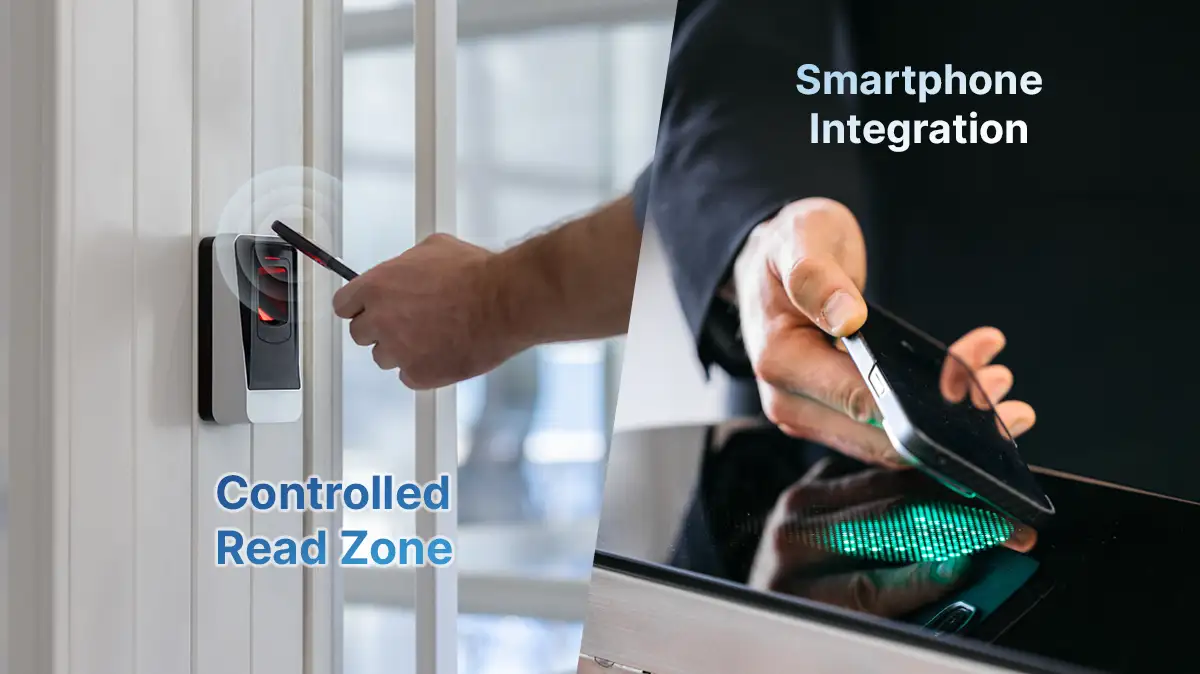
Controlled Read Zone: The short range (1–10 cm) means readers only detect a badge when it’s intentionally presented, no accidental unlocks, no credentials being read without your knowledge. Every access event is a conscious action, which is essential for any serious security setup.
Smartphone Integration: HF is the foundation of NFC (Near Field Communication), the same technology behind tap-to-pay. As a result, employees can use their phones as credentials. This reduces reliance on physical cards that get lost. Moreover, it makes it easy to issue or revoke access instantly.
Environmental Reliability: HF signals hold up against moisture and body interference better than higher frequencies, so it works consistently on the first tap, every time. In demanding environments like manufacturing floors or busy multi-tenant buildings, that reliability isn’t a nice-to-have, it’s essential.
That’s why, even as newer technologies emerge, HF RFID remains the trusted foundation of access control systems worldwide.