



Articles
When Art Meets RFID: The Future of Smart Museums
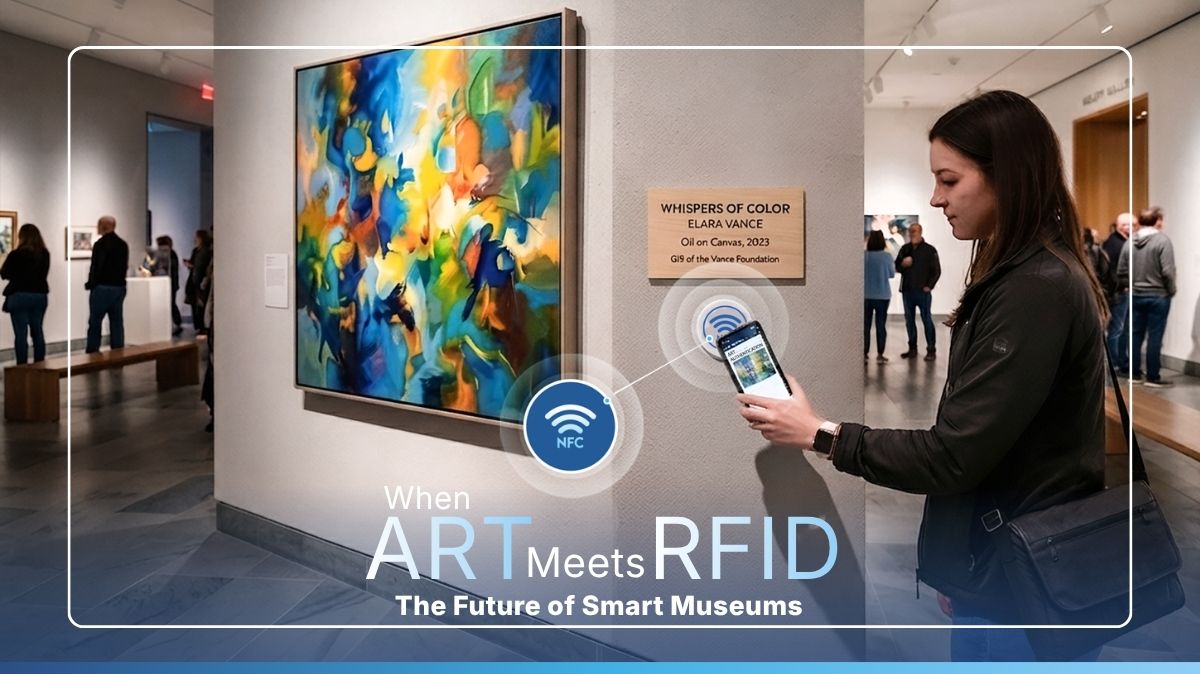
When people think of museums, they often picture quiet galleries filled with paintings, sculptures, and priceless artifacts. In reality, however, museums are much more than places that preserve works of art. They are spaces that safeguard human stories, preserve civilizations across generations, and connect people with diverse cultures through art. Every masterpiece serves as a witness to history, reminding us of our identity, heritage, and the societies that shaped us.
As the world continues its digital transformation, the idea of smart museums is taking shape, raising an important question:
How can we connect the stories of the past through the technology of the future?
Bringing Art to Life with NFC
This is where RFID (Radio Frequency Identification) technology lays the foundation for smart museums, reshaping the museum experience.
Imagine simply tapping your smartphone on an exhibition label to quickly access the story behind an artwork. From the artist’s background and the origin of the piece to its historical context, visitors can explore rich content through text, audio narration, and videos, all without carrying brochures or waiting to read crowded information panels.
Using NFC (Near Field Communication), one of the technologies built upon RFID, museums transform into smart museums and change the way visitors interact with art. Instead of simply viewing an artwork, visitors can immerse themselves in its story, explore additional content at their own pace, and enjoy a more personal museum experience.
Because the future of museums is not just about seeing art, it’s about connecting with it.
Why Protecting Art Matters
RFID’s role in museums extends far beyond enhancing the visitor experience. It also plays a critical role in protecting and preserving artworks. As the cultural and financial value of artworks continues to increase, so does the risk of theft and loss. According to INTERPOL (the International Criminal Police Organization)‘s Stolen Works of Art Database, nearly 57,000 artworks have been reported stolen or missing, highlighting the ongoing global challenge of protecting cultural heritage.
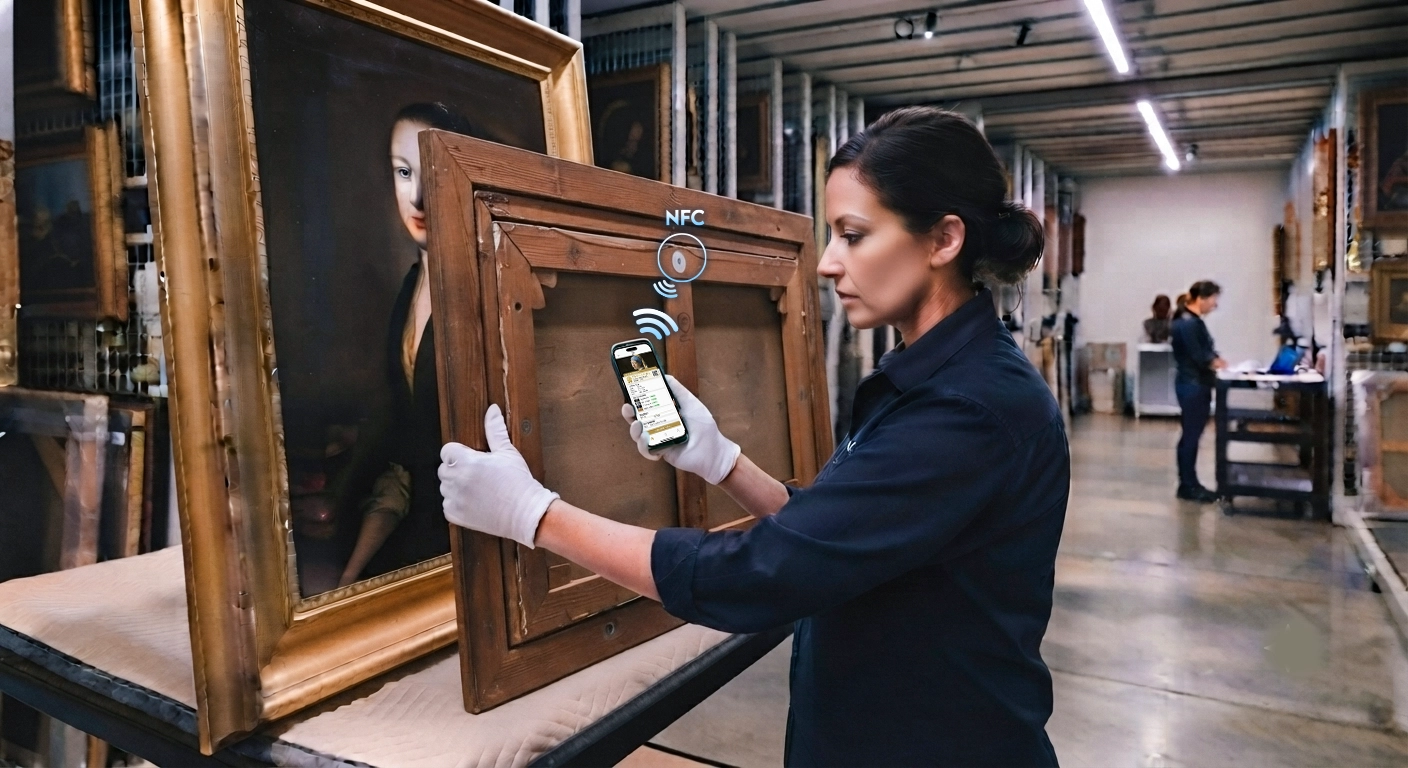
Fig. 1: A museum staff member scanning the back of a framed painting with a reader to verify its RFID tag in a storage facility.
RFID technology helps reduce these risks by creating a unique Digital Identity for every artwork through a Unique Identifier (UID). Integrated with museum security systems, RFID enables museums to identify individual pieces, monitor their movement, and efficiently manage collections throughout their entire lifecycle, from storage and transportation to exhibition.
The Silent Guardian of Art
Protecting valuable artworks should never compromise their artistic or historical value. To preserve both aesthetics and integrity, RFID tags are designed to be miniature, lightweight, and discreetly embedded behind picture frames, inside sculpture bases, or attached using conservation-safe materials that do not damage the artwork.
Working quietly in the background, RFID technology safeguards collections without interfering with the visitor experience or the beauty of the artwork itself. Because the best technology isn’t the one people notice, it’s the technology that silently protects what matters most.
Learn more about our NFC microchip products at Silicon Craft Product: NFC Chip