



Articles
RKE vs PKE: The Hidden Engineering Behind Your Car Key
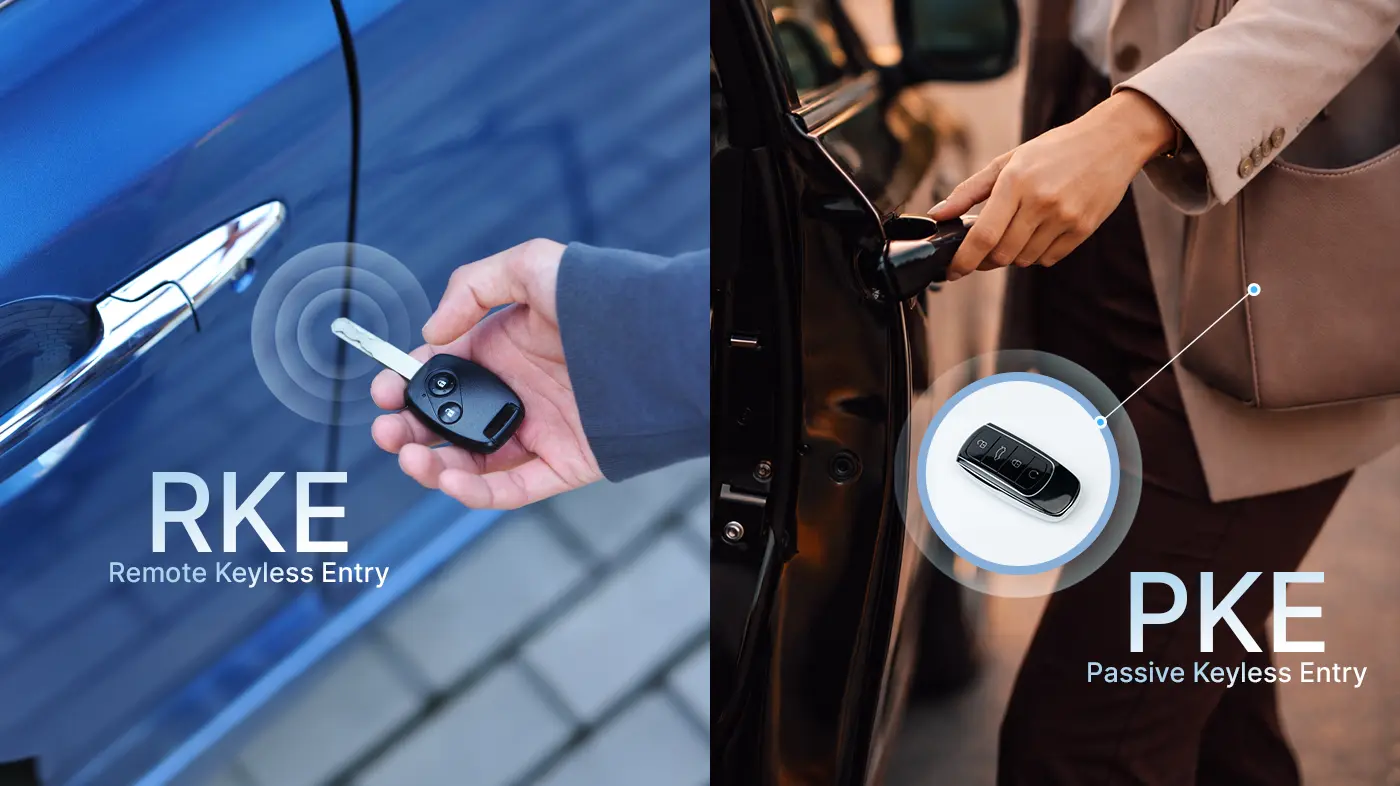
Your car key isn’t just a remote, there’s more engineering behind it than most people realize.
Two technologies dominate automotive access systems today, and understanding the difference explains a lot about why your car feels the way it does.
RKE (Remote Keyless Entry)
The system most drivers are already familiar with. Press a button, and the vehicle locks or unlocks on command. Straightforward in design, and proven in its reliability.
It’s still widely used for good reason, lower production costs, proven reliability, and straightforward implementation make it the practical choice across a broad range of vehicles. For automakers serving cost-conscious markets, RKE delivers exactly what’s needed without overengineering the solution.
PKE (Passive Keyless Entry)
No button needed. The car detects the key nearby and responds automatically, unlocking as you approach and locking as you walk away.
It sounds like a small upgrade, but the experience difference is significant. No more fumbling through your bag or patting down your pockets. As long as the key is on you, the car is ready when you are. That’s why automakers use it to elevate mid-range and premium vehicles, where the ownership experience is part of the value proposition.
So why do both still exist?
Because the automotive market isn’t one-size-fits-all. Some buyers prioritize reliability and value. Others expect seamless, thoughtful experiences from the moment they approach their car. Both are valid, and both deserve the right technology behind them.
The most successful automakers don’t default to one solution. They match the technology to the segment, the customer, and the experience they’re designing for.
It’s a reminder that even the smallest touchpoints in a product, literally the thing in your pocket, are the result of deliberate engineering decisions.
Which system does your car use, RKE or PKE?